MATH-PT: A Math Reasoning Benchmark for European and Brazilian Portuguese
·72 words
A benchmark of 1,729 native Portuguese math problems (European and Brazilian variants) for evaluating mathematical reasoning in modern language models.
PROPOR 2026
A benchmark of 1,729 native Portuguese math problems (European and Brazilian variants) for evaluating mathematical reasoning in modern language models.
PROPOR 2026
A principled framework for tensor rank identifiability based on prior predictive moment matching, with closed-form estimators for identifiable tensor models.
AISTATS 2026
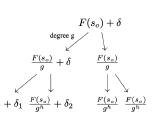
Analysis of the limitations and stability of GFlowNets under balance violations, showing how these affect accuracy. We introduce a novel metric for assessing correctness, improving evaluation beyond existing protocols.
ICLR 2025 (Spotlight, ~top 5% 🎉)
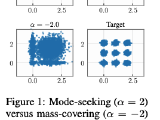
Novel approach to training Generative Flow Networks (GFlowNets) by minimizing divergence measures such as Renyi-$\alpha$, Tsallis-$\alpha$, and Kullback-Leibler (KL) divergences. Stochastic gradient estimators using variance reduction techniques leads to faster and stabler training.
NeurIPS 2024 (Poster)
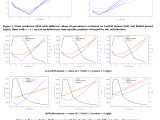
A joint model combining a Hierarchical RNN for session-based recommendations and a Point Process model for predicting return times. This approach improves both recommendation accuracy and return-time predictions over strong baselines.
WSDM 2019 (Poster)
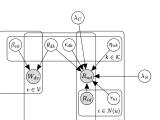
A latent variable probabilistic model for recommender systems that combines social trust, item content, and user preferences into a unified Poisson matrix factorization framework. This model jointly factorizes the user–item interaction matrix and item–content matrix, accounting for social relationships and content information to enhance recommendation accuracy. ECML 2017
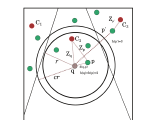
A distributed-memory approach for Locality-Sensitive Hashing (LSH) that generalizes to metric spaces using Voronoi diagrams and enables efficient large-scale similarity search.
SISAP 2014